
Trikes spark passion to get others active
Riding trikes has given teenager Liam Carter new-found freedom and independence – and a passion for helping others lead active lives.
Liam lives with cerebral palsy, which affects body movement and muscle co-ordination. It means walking has always been challenging. Discovering trikes has been life-changing.
“It’s the freedom. It’s the independence. It’s a way to get moving, get around, and just feel alive,” says Liam, who lives in Kirikiriroa/Hamilton.
That revelation also sparked the idea to set up Ride Your Trike NZ, which empowers individuals of all ages and abilities to try cycling on three-wheels by either renting or buying one.
There’s even a programme called “Try a Trike” that introduces adaptive bikes and trikes to schools in the Waikato.
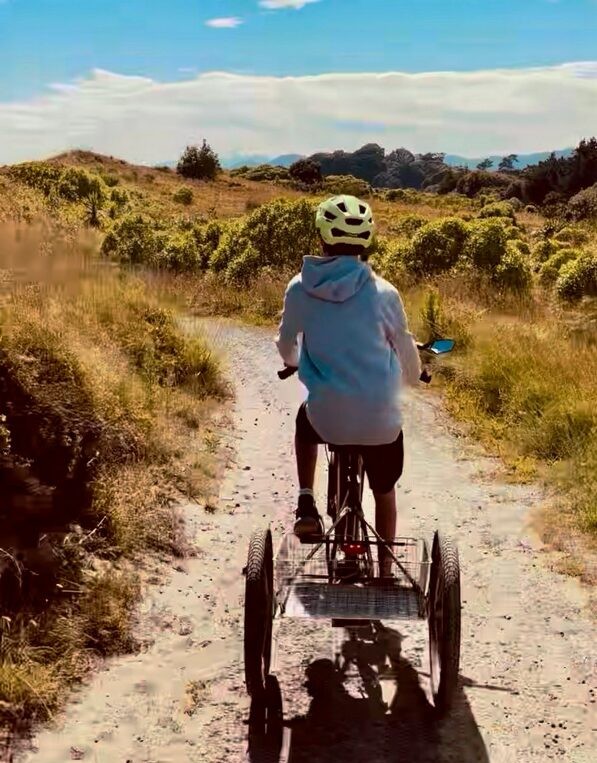 “I realised there was a huge gap when it came to adaptive cycling. People needed better equipment and more support, so I stepped up,” says Liam.
“Many people due to disability, age or the need for stability can’t easily ride a traditional two-wheel bike. Trikes and alternative bikes are fantastic options."
Since working alongside brands like Milner Mobility, Liam has had the chance to try some of the best trikes on the market.
His favourite to date is the Easy Rider, which he describes as a smooth, stable, and solid ride.
“But every rider is different. That’s the beauty of it - we work with each person to figure out what’s right for them, not just what’s popular.”
Trikes have enabled Liam to independently explore every corner of Hamilton and the nearby trails, including the Ngā Haerenga Great Rides of New Zealand.
“I’ve done parts of the Waikato River Trail Great Ride, sections of the Hauraki Rail Trail Great Ride, and all of the Te Awa River Ride, which have wide, accessible paths that really think about adaptive users.”
The Te Awa River Ride is Liam’s “local”. It’s a 65km scenic, mainly concrete cycling and walking trail that follows the Waikato River from Ngāruawāhia to Lake Karapiro. It also boasts the longest concrete path in the country.
Riding trails has been massive for his mental health.
“They’re safe, calming, surrounded by nature, and it’s a way to switch off from the busy. In Hamilton, Te Awa runs along the river, and it’s a space I go to reset and just breathe.”
There are still challenges on trails though, especially gates.
“It’s crazy how many barriers we come across - slopes, slips, bridges, narrow gates, staples... Even if they don’t seem like a big deal to others, they stop us in our tracks.
“There’s a real gap between trying to keep out motorbikes and unintentionally locking out adaptive riders.”
When it comes to helping other lead active lives, Liam says there are countless highlights.
“There have been so many moments where we’ve helped change someone's outdoor life.”
One big highlight is the annual Halberg Games, a sports festival featuring more than 250 young athletes with physical or visual impairments participating in more than 20 sports.
“The team wrote an article about two young girls, Jemma and Gemma, who said their favourite part of the event was riding the trikes. That’s what it’s all about, creating that freedom.”
Liam lives by a quote he loves from Kylee Black, a social entrepreneur and speaker who lives with a complex disability and health challenges.
“She says ‘alone we get so far, together we get so much further’, and that’s how I live, connecting, supporting and riding forward.”
So some advice for anyone thinking about trying a trike and giving adaptive riding a go?
“Come ride! Seriously, it’s so much fun. That feeling of the wind in your face is next-level.”
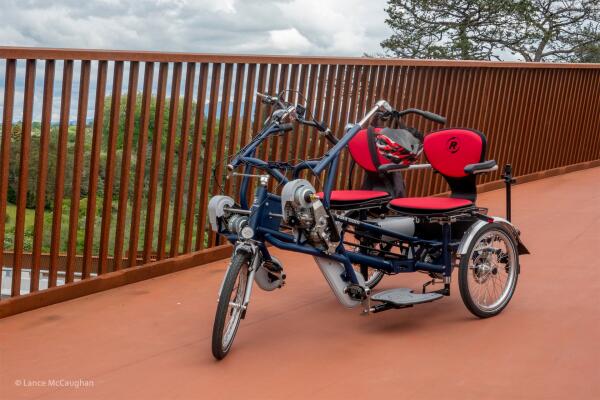
All of our 23 Ngā Haerenga Great Rides of New Zealand are at various stages of their accessibility journeys. Check out our adaptive riding hub to plan your next adventure now.
Start collecting the Great Rides at your pace, or get your friends and whānau together and ride and socialise with off-trail experiences.
